
How to Raise Through TheAngel
Keep the next cheque watching with a standing audience, clear metrics and regular updates instead of a cold sprint. Build a continuous raise.

In short
- Raising is continuous: nearly half of seed deals are bridges and the gap between rounds is about two years.
- Set up your profile, publish clear metrics, post regularly, invite every investor you meet and send a monthly update.
- A system keeps holders and warm prospects informed even in difficult months.
Raising is no longer a single event. Nearly half of seed deals are now bridges from investors who already hold the company, the typical gap between headline rounds is about two years, and more than half of new capital arrives through networks and referrals rather than cold outreach. The founders who keep getting funded are the ones who stay visible to the people who can write the next cheque.
TheAngel is built for that reality. It turns investor relations into a standing system instead of a last-minute sprint. The five practices below are how founders use it to stay warm between rounds.
The raise never really stops
Most founders still treat fundraising as a project with a start and finish date. The data shows a different pattern.
Seed bridge rounds (interim or extension rounds, usually led by existing investors) have become normal:
- 31% of seed deals in 2022
- 39% in 2024
- 46% in Q1 2025
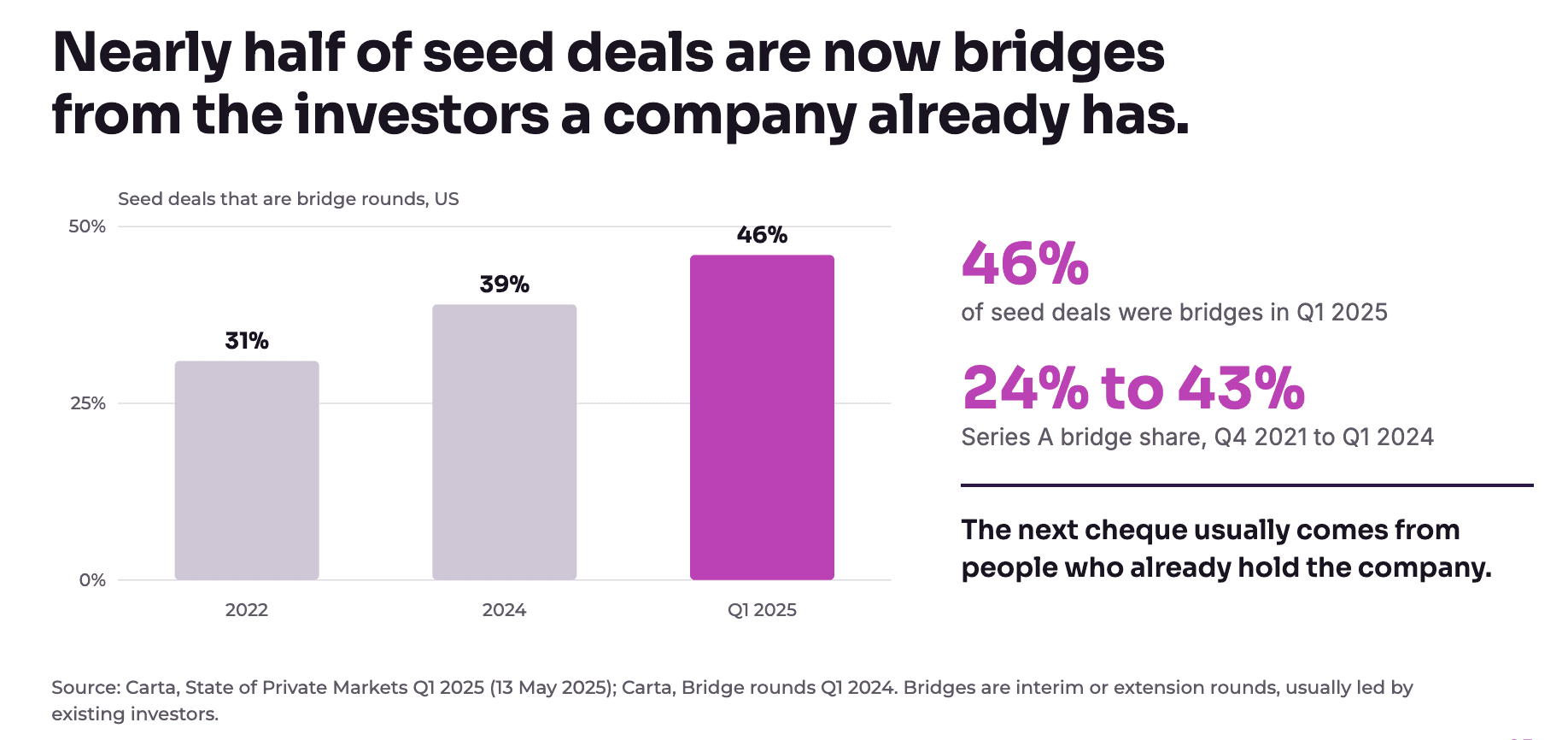
The time between those headline rounds is long. The median gap from seed to Series A sits around two years. In 2025, 39% of Series A rounds still arrived three or more years after the seed. When markets tighten, existing holders carry more of the load: insider-led rounds rose from 10.8% of US venture capital in 2012 to 23.8% in 2022.
New money is not primarily cold either. In a large survey of venture capitalists, professional networks, investor referrals and portfolio company referrals together accounted for more than half of deals. Cold inbound from management was roughly 10%.
The practical implication is straightforward. The people most likely to fund your next bridge or round are people who already know the company. The question is whether they have heard from you in the last 18 to 24 months.
Why silence is expensive
Frequent contact travels with better outcomes. In one of the better-known angel studies, investors who stayed in contact once or twice a month earned 3.7 times; those who checked in once or twice a year earned 1.3 times. That is correlation, not proof that updates cause returns, but the direction is consistent with how professional investors behave: most VCs stay in weekly or frequent contact with portfolio companies.
The problem is that the update usually dies exactly when it matters most. People systematically delay bad news. In venture, write-offs roughly double after a new fund closes. Managers withhold negative information longer than positive information. Founders are not immune. When the quarter is hard, the email stays in drafts.
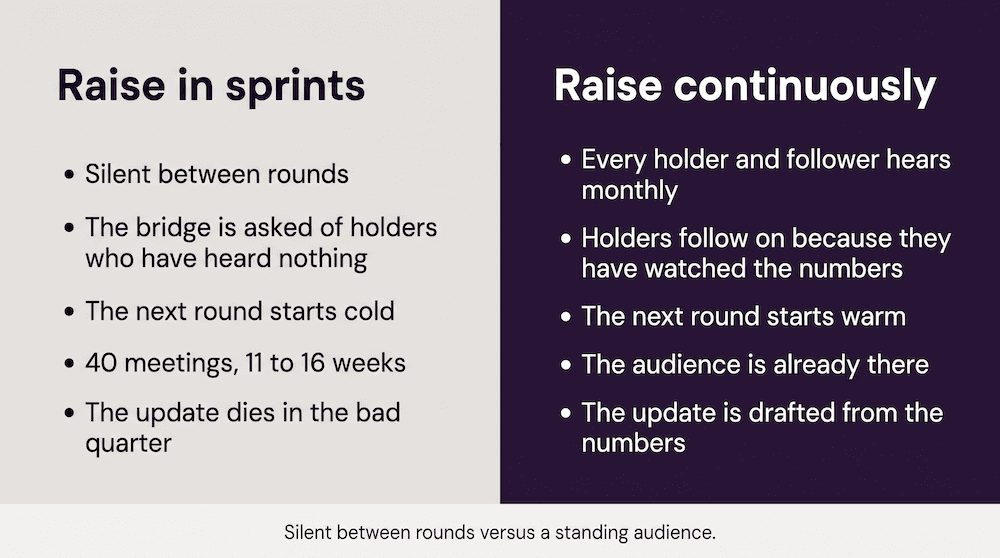
The conventional alternative, go quiet then sprint when you need money, is slow and cold. Successful seed raises in one vendor study involved about 40 investor meetings; unsuccessful ones involved 15. Raises commonly take 11 to 16 weeks, and only a small fraction of companies still raising after month four secure funding.
Five practices that keep capital warm
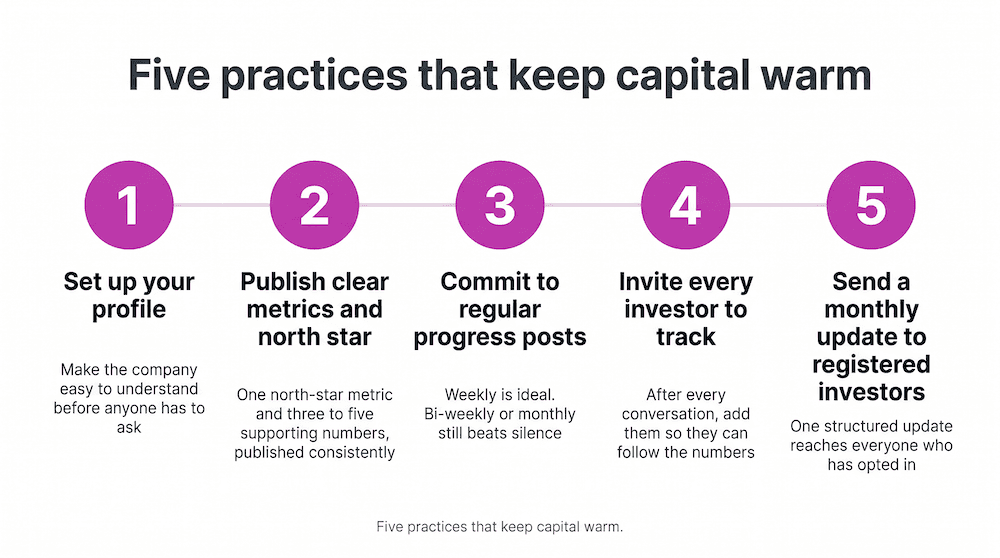
These are the habits that turn TheAngel into a continuous raise rather than a document repository.
1. Set up your profile
Make the company easy to understand before anyone has to ask. A clear one-liner, stage, current round status, key facts and links give anyone who already knows you (or is introduced) a single place to stay oriented. Profiles are the lowest-friction way to stay discoverable inside the networks that actually move capital.
2. Be clear about your traction metrics and north star
Choose one north-star metric and three to five supporting numbers that actually drive the business. Publish them consistently so holders and followers can see trajectory, not just narrative. Dated, repeated numbers reduce the confusion between paper marks and cash and make it easier for an existing investor to decide whether to lean in on a bridge.
3. Commit to regular posts on progress and traction
Weekly is ideal. Bi-weekly or monthly still beats silence. Short posts on traction, product, hiring, milestones or learnings keep the thread alive even when a formal update feels hard. They are the lightweight signal that prevents the relationship from going dark between the bigger moments.
4. Invite every investor you engage with to track your progress
After a conversation, warm or cold, the simple ask is: I will add you so you can follow the numbers. This converts one-off meetings into a persistent audience. Because most new capital arrives through networks and referrals, the people you meet today are often the people who can introduce or write the cheque in 18 months. Giving them a place to stay current costs almost nothing and compounds.
5. Send a monthly update to registered investors
This is the formal cadence that reaches everyone who has opted in. Once the metrics and template are set, it takes minutes. Because it is drafted from the numbers rather than from mood, it is more likely to go out in a difficult month. Holders stay informed for bridges; followers become the starting audience for the next round.
What this looks like in practice
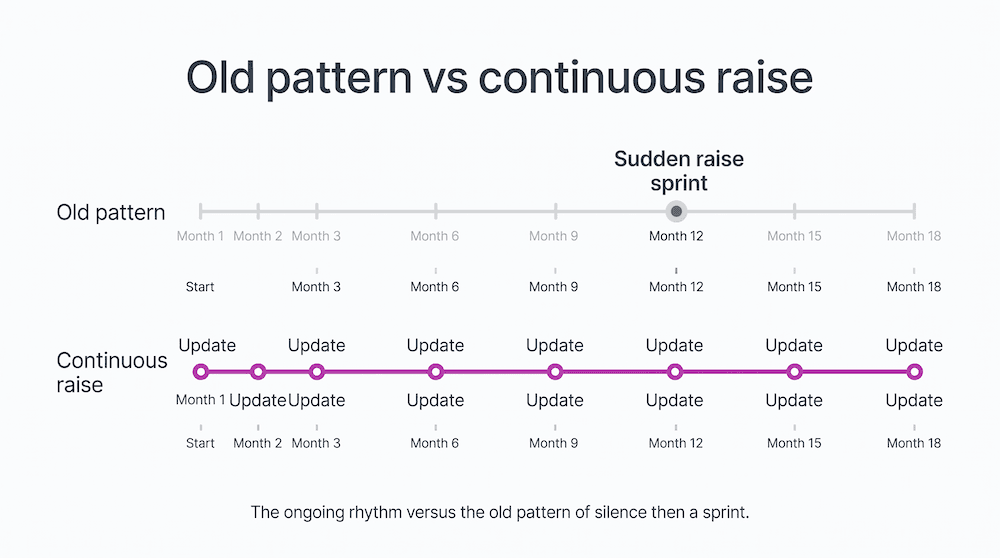
- Week 0: Profile live, north star and supporting metrics chosen and published.
- Ongoing: Short progress posts (weekly if possible).
- Every meaningful conversation: Invite the investor to track the company.
- Once a month: One structured update to all registered investors.
When you open a bridge or a new round, the people who can write the cheque have already been watching the same numbers you have.
What this does and does not do
This approach works because existing investors are funding more of the company, new capital arrives through relationships, and consistent contact keeps those relationships alive. A system removes the willpower failure that hits in bad quarters.
It does not manufacture exits, create liquidity, or replace the need for a strong business and credible deal flow. Better information improves the odds that the right people stay on the radar and can make informed decisions. It is not a guarantee of additional capital, and public or semi-public posts are not a substitute for confidential board-level reporting.
The choice is practical. You can treat every raise as a cold sprint from silence, or you can keep a standing audience that already understands the trajectory. The second path starts with a profile, clear metrics, regular posts, invitations to track, and a monthly update.
Set up the profile and metrics this week. Send the first monthly update this month. The next cheque is more likely to come from someone who has been watching than from someone you have to reintroduce yourself to.